
WPG Radio. Seth Grossman.
Above YouTube Video: Second Floor of the Quarter of the Tropicana Hotel-Casino in Atlantic City on Saturday Night, August 1, 2026
Also click here for link to Facebook video: https://www.facebook.com/share/v/14nR8Auck5C/
-
Viral Videos of Fights and Violent Confrontations in Atlantic City Last Saturday (August 1): They apparently started at the Bungalow Beach Bar, moved onto the Boardwalk, and then into the Tropicana Casino and its entertainment mall known as the Quarter. There were other disturbances outside the closed Chelsea Inn. This was widely reported on Facebook and other social media and provoked much public comment. It appears that nobody was seriously injured. However, will the perception of what Thomas Sowell called “Black Redneck” culture kill Atlantic City again, as it did in early 1970s, before casinos?
- Deadly Shootings and the Perception of Crime Destroyed Atlantic City before casinos in 1972-1973: During these years, there was a random fatal daylight shooting on the Boardwalk. There was a deadly shootout between two Philadelphia gangs at the Club Harlem. Someone threw a beer can at a Miss America contestant during the Miss America Pageant Parade which was then held at night. By 1974, there was a popular expression, “Will the last person to leave Atlantic City please turn out the lights.” In 1974, legislators proposed amending the NJ State Constitution to allow casinos in New Jersey to fix this. However, voters rejected that proposal. In 1976, NJ voters approved an amendment to allow casino gambling only in Atlantic City.
- We need to talk about specific ways to end this behavior. Criminals who break the laws must be locked up and removed from society. If we don’t have enough jails, especially youth detention jails, we need to build them. There have to be consequence for barbaric behavior. We also need to have teenagers working again during the summer. That means we need to get rid of minimum wage laws. Nobody is going to pay high wages to kids who never worked before and need lots of supervision and training. We also need to remove mentally ill and drug and alcohol addicted “homeless” from tourist areas. Of course, we can’t do anything until we are free to openly talk about these things.
Update: These incidents are becoming normal at many vacation destinations including cruise ships and amusement parks. The first video below describes brawls and fights that broke out during the last night of the Wisconsin State Fair on Sunday, August 16. The second describes an alleged attack on a nine year old child on a luxury cruise ship.

-
It is now normal to name public buildings after mediocre career politicians. Atlantic City’s City Hall was just named after Ernest Coursey. At one time, public buildings were named after people who achieved something extraordinary. Now we name buildings after politicians who have been in office a long time. Ernest Course was first hired by Atlantic City’s City Council President to drive him around and do personal errands in 1986. His job title was clerk-typist even though he never learned how to type. In 1991, he was elected to City Council from his ward. He was appointed to deputy mayor, a full-time position created for him when he helped get a new mayor elected. When that mayor was voted out of office, Coursey ran and was elected to the Atlantic County Board of Freeholders (now Commissioners) from one of five county districts. He was elected to four three-year terms. He then helped elect a new Atlantic City mayor. That mayor appointed to a newly created full time “chief of staff” position. He then got sick and died last year. He was not known for any extraordinary or particular achievement during his 39 years in politics. And now City Hall in Atlantic City is now named after him.
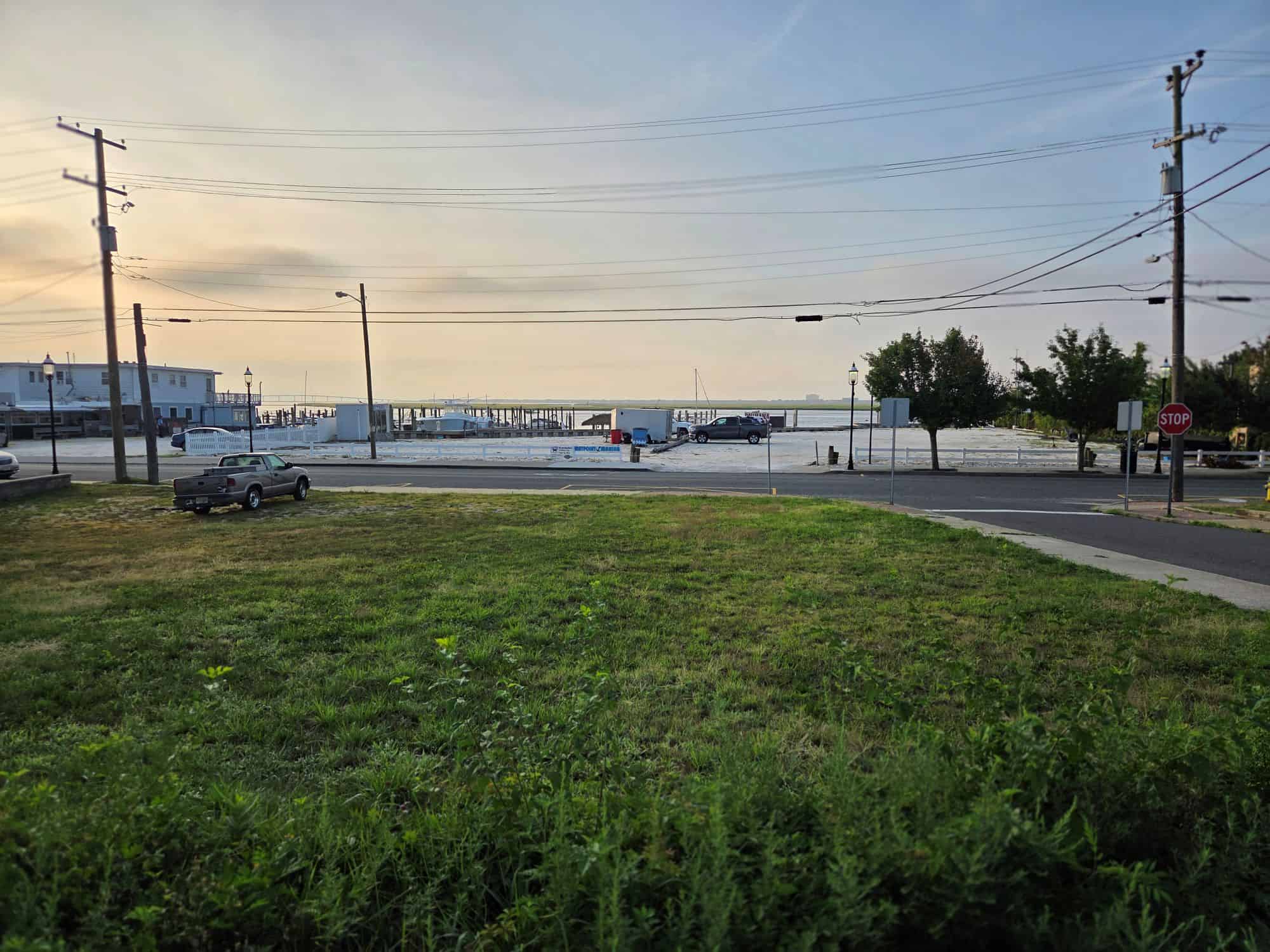
Above Image: Site of the old Dolphin Dock on Bay Avenue in Somers Point. The old owners retired and closed their bait and tackle shop in 2014. New owners thought this was an ideal spot for a new restaurant. They were denied permits because zoning laws required more parking spaces. (The Clam Bar next door doesn’t have enough parking spaces either. However, it was built before new zoning laws went into effect.)

Above Image: Site of old parking lot of Shore Medical Center on Bay Avenue in Somers Point. When the hospital built a new three level garage for patients and staff, it planted grass and trees on its old parking lot.
- New Jersey Zoning Laws do nothing but guarantee high prices, high taxes and stagnation. Most towns in New Jersey towns have zoning and building laws that do not allow any successful new buildings or businesses to be built anywhere. new business to be built or opened anywhere. Almost every existing business and building is in violation of something in the zoning or building laws. If the owner gets old and wants to sell to someone who wants to build or operate something new, almost anything new violates the zoning law. If the building burns down, and the owner just wants to rebuild what he had before, he can’t do it. Nothing new can get built or opened unless that owner gets a “variance” from the law or a special “redevelopment zone” for just his property. This is expensive and often takes years. The application process requires expensive lawyers, experts, and political connections. Only rich insiders can do this. Even after doing all this, many applications are denied. This is one reason why everything is too expensive. This is why the site of the old Wonderland amusement park in Ocean City has been a dead zone in Ocean City for the last two summers. This is why so much prime waterfront land along Bay Avenue in Somers Point has been vacant for years.
- Pension System and Cost-of-Living Increases: Retired police and firefighters are lobbying for yearly cost of living increases in their pensions. If the pension funds were sound, this would not be a problem. However, New Jersey government pension funds are broke. There are many reasons for this. For years, there was no connection between how much employees put into their pension funds, and how much they received when they retired. Police officers and fire fighters would often work years for modest salaries, but then get promoted to chief just before their retired. Their pensions were based on their salaries as chief rather than salaries during most of their careers. Teachers and even lifeguards routinely got big pay hikes just before they retired to juice up their pensions. Then, the police got the law changed so they could retire at age 55 after 25 years of employment, and at any age after 30 years. That meant some police officers and firefighters retired as early as age 52. The pension funds never collected enough contributions to pay retirees for that many years. Some retirees live until their 80s and spend more years collecting their pension than they did working!
SPEECH TO TEXT ROUGH TRANSCRIPT:
– We’ll probably begin – by talking about the series of violent incidents – that took place last Saturday – on the boardwalk in Atlantic City. – I don’t know if you heard much about – it, but it’s been all over Facebook, YouTube, – all the social media. – Apparently, it began, – last Saturday night, August 1, – at when there was a fight at the – Bungalow Beach Bar, – in the beach, I guess, off the, the – Tropicana Casino. – And then they canceled a party there. About – 400 people went on the boardwalk, – and there were fights on a boardwalk, and – then many more moved into – the club voice at the Tropicana – and where there was another big fight. And – then the fight spilled – over into the, I guess, “The Quarter” an area of shops and restaurants in the Tropicana Casino. Then it went outside to the Chelsea Inn, – which is closed, but apparently there was a – fight outside, and then to near the Albany Avenue Bridge. And, of course, when you look at the – video that’s been posted, – almost everyone all of those involved were young and Black. They met the profile of people who were part of what Thomas Sowell called in 2005 a “Black Redneck Culture.” Although dozens of people were involved, only about four or five were arrested.
And of course, video of this is all over Facebook and YouTube. It reminds me of what Atlantic City went through back in 1972 and 1973. That was when someone was randomly shot and killed on the Boardwalk, in broad daylight in the Inlet section. I remember being in the military in, – in South Carolina at the time, and everybody – in South Carolina was talking about somebody getting, – you know, shot and killed on the Boardwalk – Of Atlantic City. –
And then, – I guess the following Easter, two gangs from Philadelphia had a shootout at the Club Harlem in Atlantic – City, – and that was the end of the Club – Harlem. – And a couple years later, somebody threw a beer can at a – Miss America contestant during the Miss America parade. – And, really, that perception of violence, – that perception of a ghetto culture in Atlantic – City killed Atlantic City. – And that created the need – for the casinos. We had the casinos. We – had, – forty years of boom in Atlantic City, – but we we never dealt with that problem. – And, – and I don’t know if if this is – going to hurt Atlantic City again, – but it seems that dealing with this perception – or this crime problem, homeless problem, whatever you – want to call it, if the word gets out – there that Atlantic City is unsafe, Atlantic City – is unpleasant – Yeah. You could spend hundreds of millions of – dollars on redevelopment projects, – but it won’t do any good. And we’d – see how this perception – has killed amusement parks, – has killed – cruise ship lines, – has killed the the brand names of a – lot of resorts because people, you know, have – to deal with this when they live, you – know, live in a town, but they don’t – have to go on vacation to to put – up with it. And I don’t know if – you heard much about that incident – or or what’s being done to stop it. – No. I really didn’t hear about it, and – then you did shed a lot of light – on this. But it’s been an ongoing problem, – and like you said and I remember that – thing in 1971 – because I worked I worked here for a – brief period in that time frame. – And So so it’s it’s just an ongoing – problem. I don’t know what they do about – it. You’re right, though. – You know, you can spend all the money – you want, and you’re not gonna get people – to come here if they’re afraid. – Well, but the the good news is because – what is tolerated – in other towns – cannot be tolerated in a resort, – it should mobilize us to want to start dealing – with it.
So we have to start honestly – talking about – how we have to stop glamorizing – and rewarding and putting up with bad behavior. – We gotta put criminals, – in prison and keep them there because basically – when criminals do stuff and nothing happens to – them, there are no consequences, – of course more people are gonna do it. – And a lot of these dangerous criminals are – being released – because we don’t have enough jails, We don’t – have enough prisons. – We don’t have any politicians even talking about – the need for it. – And then we have to talk about all – the welfare programs that make it possible – for people to get everything they want. Good – housing, good medical care, good food, good meals, – all this stuff without bothering to work or – save or have any discipline whatsoever. – And and somewhat related to this is the – minimum wage. – You know, when they every time they raise – the minimum wage, – what it does, it it doesn’t end any – poverty. It just means that, – businesses are not gonna hire, – you know, marginal workers. You know, when when – you have people who have never had a – job before, they’re not used to having a – job, – they’ll show up late. They won’t take discipline. – They’ll leave early. They won’t do what they’re – supposed to do. – So to compensate for that in the past, – businesses will have to pay them – low wages because, you know, the boss would – would have to do twice as much management – work to get them to do their jobs. – But once you’re you’re, you know, someone is – forced to pay $16.17, – $18 an hour, – you know, why would they bother dealing with – marginal people? So now you’re having, – people, young people, – they’re turning 23, 24 years old, and they’ve – never had a job in their life. So, – that’s a major problem. – And, you know, in a resort like Atlantic – City, we have plenty of unskilled jobs, – you know, that could be teaching people how – to have normal lives, but we’re not doing – that right now. And, we ought to think – about it. – Boy, you you just said a lot there – in your your opening comments. –
But, by the way, the the other thing – and and and somewhat related to this in, – you know, it shows the state of of – things. In city hall, they named – Atlantic City’s city hall after Ernest Coursey. – Now there was a time when we named – public buildings after, you know, people who achieved – something, – who did something great, who excelled in something. – And, of course, you know, without, – one of the reasons I I’m sort of – close to Ernest Coursey, – is because when I became went on city – council – in 1986 – in Atlantic City, – one of the first things on on, – on city council was I sued the council – president, – Walter Collette, – for illegally hiring Ernest Coursey – to basically be his personal driver – and and, you know, guy to do all – of his errands. – And, his title was clerk typist, but he – didn’t know how to type. – So we had this whole thing. And finally, – Ernest Coursey was allowed to be legally hired – as a personal aid to the council president. – Ernest Course was first hired by Atlantic City’s City Council President to drive him around and do personal errands in 1986. His job title was clerk-typist even though he never learned how to type. In 1991, he was elected to City Council from his ward. He was appointed to deputy mayor, a full-time position created for him when he helped get a new mayor elected. When that mayor was voted out of office, Coursey ran and was elected to the Atlantic County Board of Freeholders (now Commissioners) from one of five county districts. He was elected to four three-year terms. He then helped elect a new Atlantic City mayor. That mayor appointed to a newly created full time “chief of staff” position. He then got sick and died last year. He was not known for any extraordinary or particular achievement during his 39 years in politics. And now City Hall in Atlantic City is now named after him. He is a role model for what we now expect young people to achieve in politics.
And as you know, when you, in – New Jersey, our pension system, – there’s no connection between how much money you – put into the pensions and how much money – you get paid. – The, New Jersey pensions are based on how – much you’re making during your last three, four, – or five years before you retire. – So it’s very normal for these, people to – get part time political jobs like Ernest Coursey.. – And then just before you’re ready to retire, – get promoted to a full time job. And – I think he was, – became chief of staff to mayor Marty Small. – And then you retire, and then you retire – with a pension based on, like, an $80.90, – $100,000 – salary, and he retires comfortably. – Tragically, he he got sick and he died. – But is that a role model? And I’m – afraid that it is. That that’s the model – for a young black man, – in America today. – That your only – ways to success – are either professional sports – or politics. – And when you and I grew up, you – know, we had, you know, blacks, were owning – hotels, owning restaurants, Reggie Edgehill. Sarah Spencer Washington. – All these business opportunities, – but now there are no business opportunities for – young people in America. – And the proof of it is you have – a millionaire named Eustace Mitat can’t even – get a permit to build a hotel – on the Boardwalk in the resort commercial zone of Ocean City. Yeah. So – if a millionaire can’t can’t get a a – permit to build a hotel, how could any – ordinary young person get permits to, – you know, to do anything? And that’s – something that we have to be also be – thinking about. – What is your what is your take or – what is your thoughts on changing that? In – other words, making it easier – for people to go into business or to – to do business with New Jersey. – I ironically, we’re actually seeing that in Somers – Point as well. – And you had one council man called Sean – McGuigan in Somers Point. – He wanted to make it easier to get – permits, – to open up new businesses in Somers Point. – And – as you know, Somers Point, like most towns – Atlantic City, have these zoning laws, which basically – say that 95% – of every single property in the town is – in violation of something. – So if you wanna build anything, you need – a variance or an exception – to the zoning laws, and there are two – ways to do that. Either have to have – the city develop a whole redevelopment – plan just for you, and you need a – whole bunch of money, and you need political – influence and all that stuff to get that, – or you need a variance. And if and – to get a variance, – you have to give notices to all everyone – who lives within 200, – feet of your property. And if you made – an enemy somewhere along the line, that person’s – gonna be there to tell you tell the – whole world why you shouldn’t get a permit. – And it’s very difficult. So you you’ve got – to change these laws. And, basically, – you know, if I had my way, say – whatever is legal in the town right now, – you should be legal to continue doing that – same thing. – So if you had a a previous business – did not have parking spaces, – your new business should not have to have – parking spaces either. – And and if and the proof of it, – just look at Somers Point. I was actually – sitting – on the balcony of the Anchorage, – tavern looking across at what used to be – the Bayshore’s two restaurant – and a thriving marina. – That lot’s been empty for about ten or – twenty years. You know, down the street, you – had something you used to call it a – doll the Dolphin Dock. Used to be a – business for fishermen. – So there’s nothing wrong with someone with a – business – who does a business their whole life and – then they retire. – And and somebody new – wants to start a new business because, you – know, taste change. – But to say that the the the new – business has to meet all these – requirements that the old business never had to – require. And and let’s say, God forbid, let’s – say the business is successful and it has – a whole bunch of customers, – and now there are not enough parking spaces – on the street. Well, what happens? – Well, in Summers Point, you know, you used – to have a whole big parking lot in – front of the hospital that’s been closed down. – You could, you know, pave over the grass – and have that parking lot there again. You – could have a parking lot where the nursing – home could be. You could do all sorts – of things. – You could have shuttle buses running. – When people are making money, when businesses are – succeeding, – there’s always ways – to, – to to make things work. But the trouble – with our boomer generation – is, you have all these people who say, – yeah. When I grew up in Somers Point, – there were more people on Bay Avenue in – Somers Point than you had on the Ocean – City Boardwalk. – And, yeah, it was bustling. You had all – these businesses. You had Tony March. You had – Bayshore’s, all this. But now that I have – my little – house, I wanna look at a quiet empty – lot. I don’t wanna be bothered with traffic. – So it’s basically the boomer generation really – smothering – the generation that came after us, telling them – they can’t have the opportunities and enjoyment – we – had. So no wonder they can’t stand us. – Yeah. Now that you put it that way, – you’re right. – Sorry about that. And and finally, there’s there’s – there’s this one other point that, was talked – about on the Harry Harry Hurley program a – lot, and that is the issue of retired – police officers and firefighters – have not had cost of living increases in – their pensions – for the past sixteen years. – And, you know, they’re calling for justice to, – to to lobby our our state politicians to – change the law to get them cost of – living increases. – So here’s the the final thought that we – have to think of. – Well, – do private people, – get cost of living increases? – In other words, if I put money into – my four zero one k or my retirement – program – and, and I put enough money aside so – I could retire on $40,000 – a year and then get increases. – But if I decide to to take out – $80,000 – a year, – I’m gonna use up the money I saved. – And not only will I not get any, – you know, cost of living increases, I won’t – get anything. – So what happened to the New Jersey pension – system? – And as I pointed out, the New Jersey – pension system from the get go – had no relationship – between how much money you pay into the – system and how much money you get out. – You know, you look at these small towns. – Every year, they get a new police chief. – And I won’t name the specifics, but you – know why they get a new police chief? – Because, – when police officers in these small towns are – getting ready to retire, – their salary may be, say, $80,000 – a year, and their pension is based on – $80,000 a year. But if they get appointed – chief just before they retire, their salary goes – up to a $160,000 – a year, and then they get a pension – based on a salary at a $160,000 – a year. But they never put any money – into the system based on that salary. You – based on that salary. You see what I’m – saying? Yeah. So so we have to talk – about that. – And I don’t know if you remember when – the police officers, several years ago, – lobbied – for 25 and out. They wanted to get – pensions after twenty five years of service – regardless of their age. – So by my arithmetic, if someone starts as – a police officer at age 22, – that meant you had police officers eligible – to retire at age 47. – Most taxpayers don’t get to retire at age – 47. – So I don’t know whether when they when – they police officers gave up cost of living – increases, whether that was some sort of trade – off. I honestly don’t know the details. But – if we’re gonna talk about, – you know, bailing out, government pension systems, I – think we have to know, – all the facts about it. And I think – we have to say, if we’re gonna bail – out pension systems, why why should you make – people who are not getting the benefits – pay for people who – who, you know, – who who are getting them? And when people – say, well, our government broke our promise to – us. Now who who picks these politicians? – Aren’t aren’t, don’t the teachers union and the – public employee unions, don’t they have more political – clout than anybody else?